




If your sink is draining slowly or refusing to let water go at all, it’s frustrating and can mess up your routine. Whether you have a kitchen sink packed with food scraps or a bathroom drain clogged with hair, this guide will walk you through safe DIY fixes, what to watch out for, and when calling a licensed plumber is the smartest move in Red Deer, Lacombe, Sylvan Lake, or nearby.
What Should You Do Before Unclogging?

Before grabbing tools or chemicals, a quick check can save you time and hassle. Make sure you get all these in order for a smoother workflow:
Identify if it’s just one sink or multiple affected
If only one sink is slow, the clog is likely in its drain or trap. Multiple backed-up fixtures may indicate a deeper plumbing or sewer line issue.If only one sink is slow, the clog is likely in its drain or trap. If several fixtures are backing up, the issue may be deeper in your house’s plumbing or sewer line.
Check sink stopper, strainer, and garbage disposal (if you have one)
Check sink stopper, strainer, and garbage disposal: Remove stoppers or strainers and clean out gunk. Ensure garbage disposals are clear and functioning. Sometimes the problem is just at the top. You can also read more about common plumbing emergencies in Red Deer to know when DIY may not be enough.
What DIY Methods Can I Try?
Many sink clogs are mild enough that you can fix them yourself using simple tools and supplies.
Hot water flush
Boil water and carefully pour it down the drain in stages. Hot water can melt and flush out grease that has solidified inside the pipes.
Baking soda and vinegar mixture
The good old hack! Pour about half a cup of baking soda, then a similar amount of white vinegar into the drain. Cover and let sit for 10‑15 minutes. Flush with hot water to push debris through.
Plunging with a sink‑plunger technique
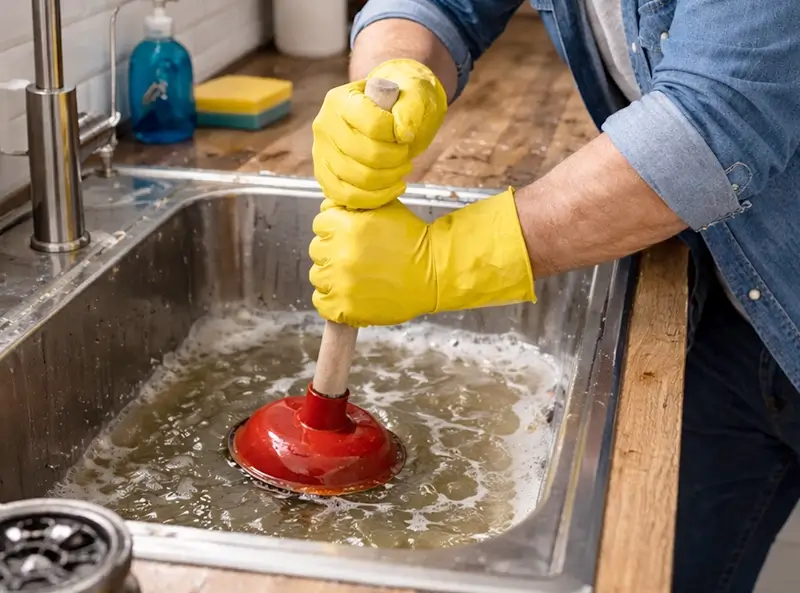
Use a sink plunger (with a good seal) to push and pull water. This creates pressure and suction that can dislodge blockages. Be sure to block nearby overflow holes if there are any.
Using a wire hanger or zip tool for shallow clogs
For debris close to the drain entrance, a straightened wire hanger or a zip tool can grab hair or small blockages without digging too far into the pipes.
When to Use More Advanced Tools
If the DIY fixes don’t work after a few tries, it’s time to bring in more capable tools.
Cleaning the P‑trap
Place a bucket below the U‑shaped pipe (P‑trap), loosen the nuts, and remove the trap. Clean out hair, gunk, or anything trapped inside, then reassemble carefully to avoid leaks.
Using a drain snake
Insert a drain snake into your drain and push until you feel resistance. Then rotate or crank to break up the clog. Pull out slowly while flushing with water to ensure repeat blockages are removed.
Wet/dry vacuum method
If you have a wet/dry vac, seal the hose tightly over the drain, turn the vacuum to wet mode, and try sucking out debris. It’s messy but effective for tough clogs near the drain entrance.
Persistent clogs or leaks may require professional drain cleaning services in Red Deer for safe, thorough results.
What Should You Avoid Doing?
Some “quick fix” solutions seem tempting, but can make things worse over time.
Using Harsh chemicals on old or metal pipes
Strong chemicals can damage pipe walls (especially older or metal ones), cause corrosion that can leak to your drinking water, or even burn the skin. They may clear a clog briefly but lead to more serious plumbing problems later.
Pouring Boiling Water
Very hot water can warp or soften plastic (PVC) pipe joints. Use boiling water cautiously and in stages rather than dumping a full pot all at once on older piping.
What Makes Red Deer Sinks Unique?
Red Deer’s climate and older housing stock bring some unique clog risks you should know about.
Cold winters can cause moisture to freeze in pipes, expanding blockages. Hard water in this area deposits minerals inside pipes, increasing the chance that sinks clog more often. Furthermore, many houses in Red Deer, built decades ago, have smaller diameter pipes or pipes showing corrosion. These give less room for clogs to pass and may need more frequent maintenance.
When Should You Call a Professional Plumber?

DIY is great, but sometimes a clog signals something more serious, needing professional tools or judgment.
Persistent clog
If plunging, snaking, and cleaning the P‑trap haven’t solved the issue, there may be a clog further down or damage to the pipe that needs professional inspection.
Clogs cause water backup
Standing water, flooding around the sink area, or backup into other fixtures mean the clog is serious. A licensed plumber can safely clear the blockage and protect your property.
Signs of leakage or bad smell after attempts
If water begins leaking after your attempts or a foul odor persists, it indicates buildup or damage. These are signs that pipes may have deteriorated or that the mold risk is increasing.
You can always book a local expert for drain cleaning if it’s beyond DIY.
Common Questions Homeowners Ask About Sink Clogs
How much does it cost to unclog a sink in Red Deer?
Simple unclogs, like removing a P‑trap or plunging, usually cost between $120 and $250. More severe blockages needing snaking or inspection may run $300 to $600, depending on access and the degree of clog.
How to unclog a severely clogged sink?
Try hot water flush, baking soda and vinegar, and a drain snake. If the clog persists, call in a licensed plumber to avoid damaging pipes or making the problem worse.
Does pouring boiling water down a drain help unclog it?
Yes, hot or boiling water can help dissolve grease or soap buildup. Use carefully in stages if your sink has plastic or PVC parts to protect against warping.
Do baking soda and vinegar actually unclog a drain?
They can be effective for mild clogs by foaming and loosening debris. They work best when followed by a hot water flush. Deeper or tougher blockages may need mechanical tools.
How to unclog a drain you can’t snake?
If snaking fails or won’t reach, check if the P‑trap is accessible. If not, or if the clog is too deep, contact a licensed plumber with proper tools like augers or video inspection.
Final Thought
Clogged sinks are annoying but usually fixable without a full plumbing overhaul. With a few household tools, quick diagnostics, and monthly preventive maintenance, you can keep your sinks flowing freely most of the time. If one of your DIY attempts doesn’t help, Piper the Plumber’s licensed team is just a call away.